
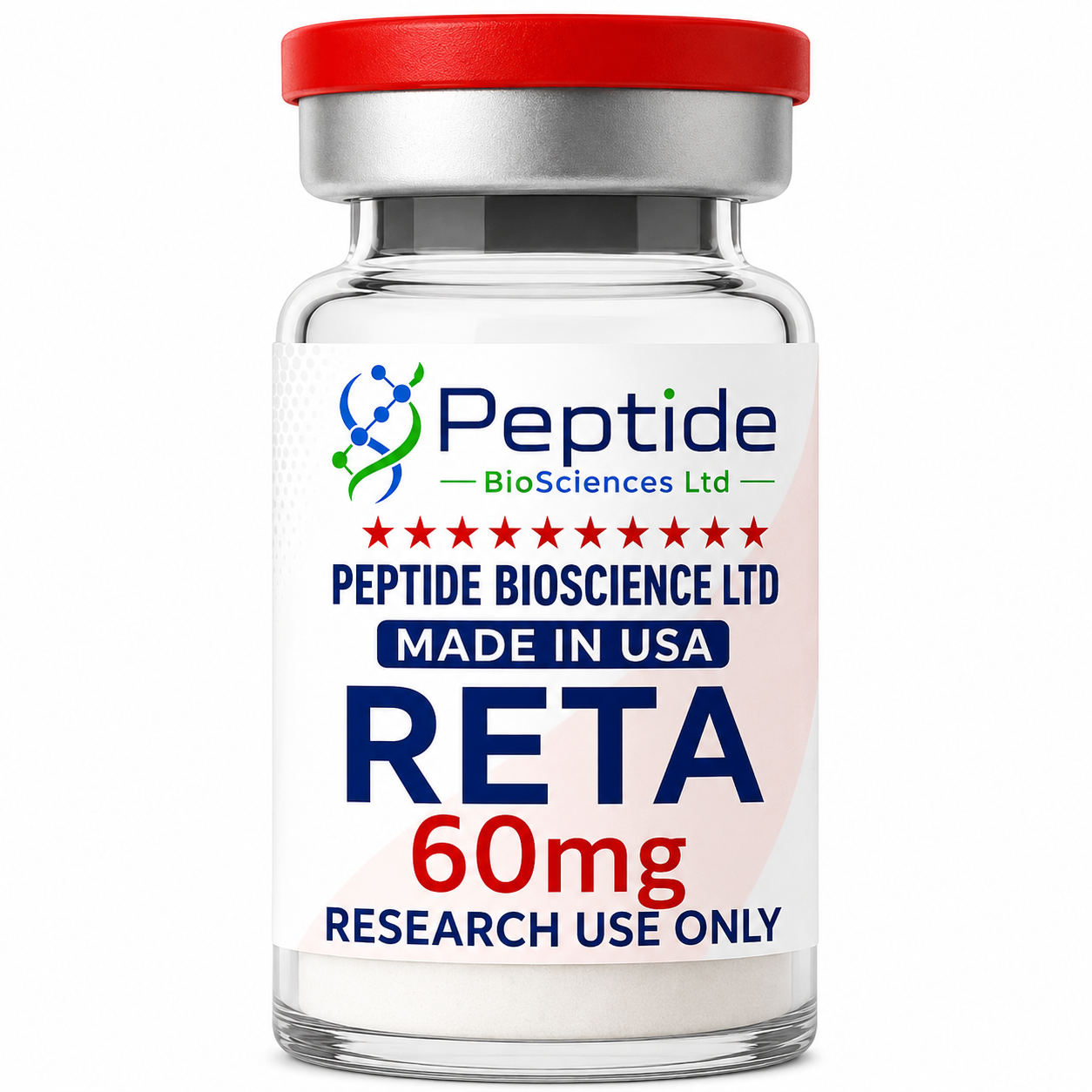
Retatrutide 60mg
Original price was: $249.00.$209.00Current price is: $209.00.
- Synthetic peptide with triple agonist receptor activity — bulk 60mg quantity
- For extended or high-throughput multi-receptor pathway research programs
- 99% pure (HPLC verified) · Third-party lab tested · Lyophilized powder
- For in vitro receptor interaction studies only
RT3 60mg (Retatrutide 60mg) — Triple Receptor Agonist
Single receptor. Dual receptor. Triple receptor. That is the trajectory of incretin-based research over the past decade, and RT3 (Retatrutide 60mg) represents the current frontier. By simultaneously engaging GLP-1, GIP, and glucagon receptors, this compound activates the most comprehensive metabolic signaling network available in a single molecule.
What the third receptor adds
The glucagon receptor is the differentiator. SM1 (GLP-1 only) and TR2 (GLP-1 + GIP) leave it untouched. But glucagon receptor activation drives energy expenditure through hepatic and thermogenic pathways that neither GLP-1 nor GIP can access. Preclinical data shows that adding this third receptor target to the dual GIP/GLP-1 framework produces the most pronounced effects on metabolic parameters of any approach studied to date.
All three receptors are G-protein coupled and signal through cAMP/PKA cascades, but their tissue distribution and downstream effects are distinct. GLP-1 receptors dominate in the pancreas and hypothalamus. GIP receptors are concentrated in adipose tissue and the CNS. Glucagon receptors are heavily expressed in the liver. RT3 reaches all three tissue compartments.
Specifications
| Classification | Triple GLP-1/GIP/Glucagon receptor agonist |
| Form | Lyophilized powder |
| Quantity | 60mg per vial |
The incretin ladder: SM1 vs TR2 vs RT3
Peptide Bio Sciences LTD stocks all three tiers. SM1 is the selective GLP-1 agonist (31 amino acids, one receptor). TR2 is the dual GIP/GLP-1 agonist (39 amino acids, two receptors). RT3 is the triple agonist (three receptors). Comparative preclinical literature documents a clear stepwise increase in metabolic parameter engagement as you move from single to dual to triple activation.
Retatrutide 60mg is Frequently paired with
- Cagrilintide 5mg — Hindbrain satiety pathway via amylin receptors
- MOTS-C 10mg — AMPK-mediated metabolic signaling
- NAD+ 1000mg — Cellular energy metabolism and sirtuin pathways
Quality and testing
Third-party tested. Batch-specific COAs available.
Storage
- Lyophilized: -20°C for long-term stability
- Reconstituted: 2-8°C, use within 30 days
For laboratory research use only. Not for human or veterinary use.
Be the first to review “Retatrutide 60mg”
Related products
Reviews
There are no reviews yet.