
Guide
Bacteriostatic Water Vials for Peptide Research
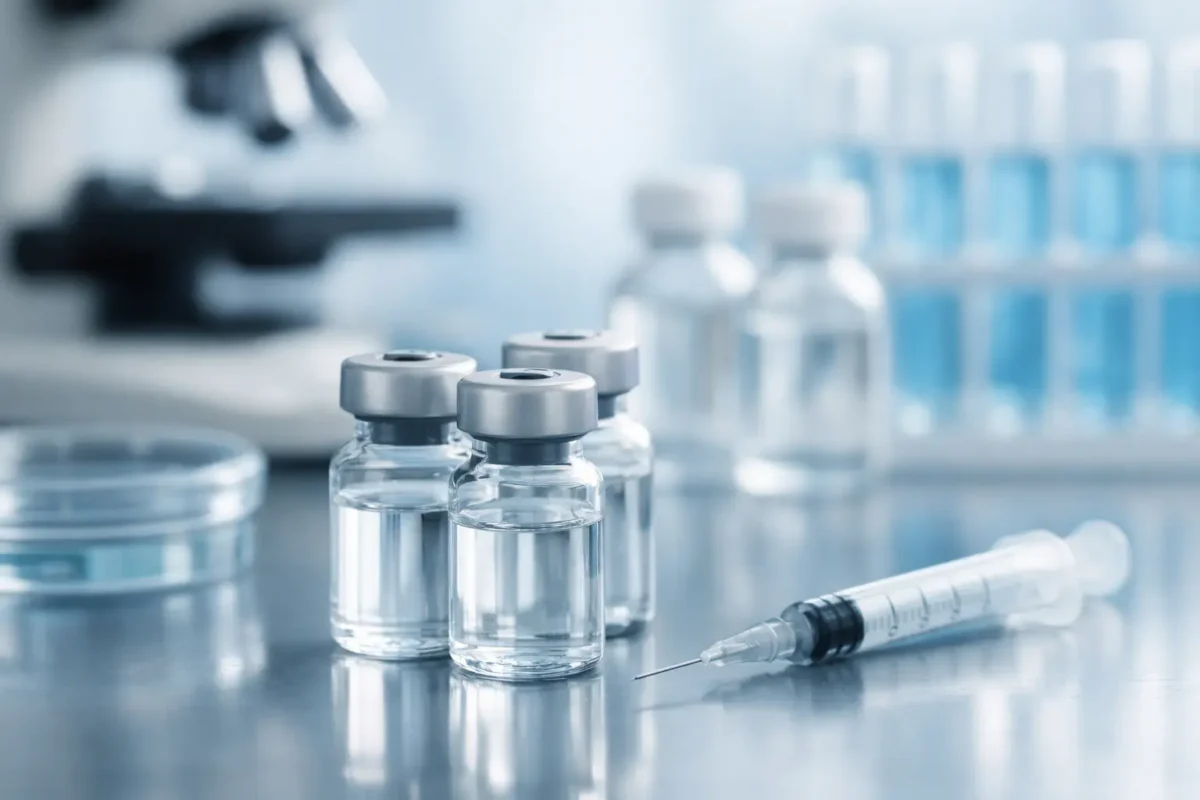
A peptide vial can be precision-synthesized, third-party tested, and supported by a complete certificate of analysis, yet a poorly chosen diluent can still introduce avoidable uncertainty into the workflow. Bacteriostatic water vials are a common laboratory support product for peptide reconstitution research because they provide sterile water formulated with a preservative. Selecting and handling them with the same discipline applied to the peptide itself helps protect consistency from one research preparation to the next.
This is not a minor purchasing detail. Vial labeling, preservative compatibility, packaging integrity, storage instructions, and traceable documentation all affect whether a support product is appropriate for a defined research protocol. Bacteriostatic water is intended strictly for laboratory and research applications when supplied in a research-use-only setting. It is not a clinical product, a diagnostic solution, or a substitute for qualified professional procedures.
What bacteriostatic water is
Bacteriostatic water is sterile water that generally contains benzyl alcohol as a bacteriostatic preservative. The preservative is designed to inhibit bacterial growth after a vial has been accessed, distinguishing it from plain sterile water that does not contain a bacteriostatic agent.
For research workflows, that distinction can matter when a protocol requires repeated access to a properly handled vial. It does not mean that a vial is indefinitely reusable or resistant to contamination under poor technique. A preservative supports appropriate use within the supplier’s labeled conditions; it does not replace clean handling, proper closures, or documented disposal practices.
The exact formulation should always be confirmed from the product label and supporting specifications. Do not assume that every sterile water product is bacteriostatic, and do not assume every bacteriostatic product has identical preservative concentration, container material, fill volume, or storage requirements.
Why bacteriostatic water vials matter in peptide workflows
Lyophilized peptides are commonly supplied as dry material. A research protocol may call for reconstitution with a specified volume of compatible diluent so the resulting concentration can be calculated accurately. The math is straightforward only when the starting inputs are known: peptide mass, diluent volume, desired concentration, and the assay or protocol requirements.
For example, the concentration of a reconstituted research material is derived by dividing the amount of material in the vial by the volume added. If a protocol changes the added volume, the concentration changes as well. That is why a clearly labeled vial strength is useful. It supports repeatable calculations and prevents the ambiguity that comes from working with an unknown or partially used volume.
Bacteriostatic water may be suitable for some peptide research preparations, but suitability depends on the protocol and material. The benzyl alcohol preservative can be incompatible with certain assays, analytes, cell systems, or stability requirements. A protocol that specifies preservative-free sterile water should not be casually substituted with bacteriostatic water simply because it is available.
This is the trade-off researchers should evaluate: bacteriostatic formulation can be useful for repeat-access workflows, while preservative-free diluents may be required where benzyl alcohol could affect the material being studied or the downstream method. The protocol controls the choice.
Specifications worth checking before purchase
A quality support product should make essential details easy to verify. Start with the stated fill volume. A 3 mL vial and a 10 mL vial may contain the same type of formulation but serve different protocol needs, inventory plans, and waste-control considerations. Buying the largest available format is not automatically the best value if the expected workflow will not use it within the labeled period after first access.
Next, review the product’s identity and formulation. The label should clearly identify it as bacteriostatic water, state the volume, provide lot information where applicable, and include storage and handling directions. Packaging should arrive sealed and intact, with no signs of leakage, compromised closures, discoloration, or particulate matter.
Documentation matters here as much as it does with peptide materials. Suppliers that prioritize transparent quality systems provide clear specifications and traceable lot information. For peptide purchasing, researchers should continue to prioritize verified purity, third-party testing, and accessible certificates of analysis. For laboratory support products, the comparable standard is a clearly identified, appropriately packaged product with specifications that match the intended workflow.
At Peptide Biosciences LTD, the same research-first mindset applies across peptide and reconstitution support purchasing: clear vial options, straightforward specifications, and no fillers or shortcuts in the quality conversation.
Handling discipline protects the preparation
A bacteriostatic vial is only as reliable as the handling process around it. Work within the established procedures for the laboratory, use appropriate personal protective equipment, and inspect the vial before every use. The stopper should be accessed only with clean, suitable equipment and according to the protocol.
When reconstituting a lyophilized peptide for research, avoid treating the process as a speed task. Confirm the peptide vial’s stated quantity, confirm the planned diluent volume, and record the resulting concentration in the research log. If the compound requires gentle mixing, follow that requirement rather than using an aggressive method that could compromise the preparation.
Labeling the reconstituted material is equally practical. The label should distinguish the material from the original dry vial and record the preparation date, concentration, lot reference, and any protocol-specific identifier. This small step can prevent a major data-quality problem when multiple preparations are in use.
Avoid transferring leftover material back into a source vial. Avoid using a vial with a damaged seal or unclear history. And do not rely on visual clarity alone as proof that a preparation remains suitable. A clear solution can still have been exposed to handling errors, incorrect storage, or conditions outside the validated protocol.
Storage is a label-driven decision
There is no universal storage instruction that should be applied to every bacteriostatic water vial or every reconstituted peptide. Follow the specific storage directions supplied with the water product and the separate instructions applicable to the peptide material. These requirements may differ.
Keep products in their original packaging when practical, protect labels from damage, and maintain an organized inventory system that separates unopened stock from opened material. Documenting dates, lot numbers, and storage status supports traceability, especially in workflows involving multiple peptide batches or several vial strengths.
Researchers should also establish a clear process for determining when opened material is no longer eligible for use. The supplier label, laboratory policy, protocol requirements, and observed vial condition should all be considered. If there is uncertainty about contamination, product identity, storage excursion, or expiration status, removal from the workflow is the disciplined choice.
Common purchasing mistakes to avoid
The most frequent issue is choosing by price alone. Cost matters, particularly for recurring research supplies, but a low price does not compensate for vague labeling, unclear formulation, questionable packaging, or missing lot traceability. Value comes from purchasing the correct material once and reducing failed preparations, unnecessary repeat orders, and preventable workflow interruptions.
Another mistake is matching vial volume to the peptide vial size rather than the protocol’s actual reconstitution volume. A larger bacteriostatic water vial may appear more economical, but a smaller format can be the more controlled option for limited-volume or infrequent workflows. Conversely, laboratories with planned repeat-access workflows may find that a larger vial size better supports inventory efficiency. It depends on expected consumption, labeled use conditions, and established lab procedures.
Finally, do not confuse a calculation tool with a protocol decision. A peptide dosage calculator can help researchers convert vial quantity and reconstitution volume into concentration and syringe-unit equivalents for research planning. It cannot determine whether bacteriostatic water is compatible with a specific peptide, assay, or experimental objective. That determination belongs to the validated protocol and qualified research oversight.
A better standard for routine supplies
Bacteriostatic water is often treated as a basic consumable, but basic does not mean inconsequential. The best purchasing decision starts with the protocol, continues through clear specifications and intact packaging, and ends with careful recordkeeping after the vial is opened.
When every support material is selected with the same precision expected of the peptide itself, the workflow becomes easier to repeat, easier to audit, and less likely to be derailed by a preventable variable.