
Guide
99% Purity Peptides: What the Number Must Prove
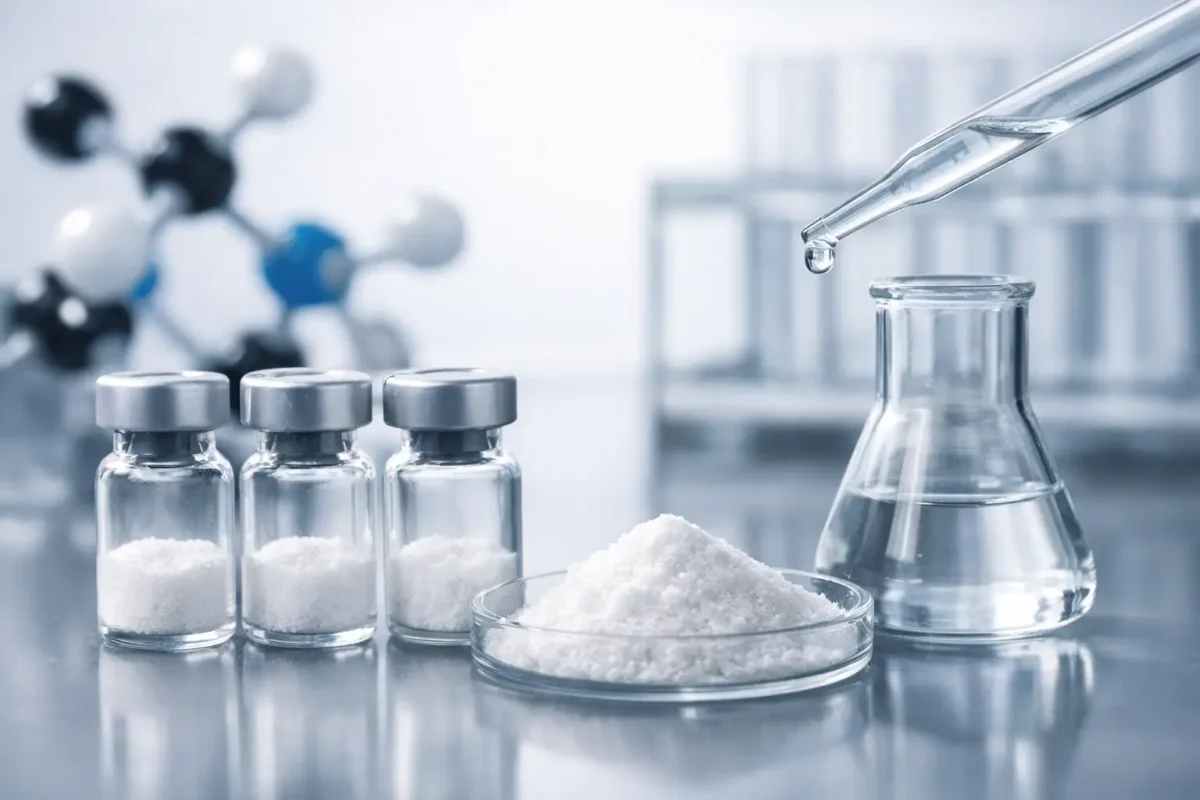
A vial labeled 99% purity peptides should prompt more than a quick approval. That number can be a meaningful quality benchmark, but only when it is supported by batch-specific documentation, sound analytical methods, controlled manufacturing, and proper handling after receipt. For researchers, purity is not marketing language. It is a variable that can affect reproducibility, interpretation, and confidence in every downstream result.
The right question is not simply, “Is this peptide 99% pure?” It is, “What does the 99% represent, how was it measured, and what documentation verifies the batch I received?”
What 99% Purity Peptides Actually Mean
A stated purity of 99% generally means that the target peptide represents at least 99% of the material measured by a defined analytical method, commonly high-performance liquid chromatography (HPLC) or ultra-high-performance liquid chromatography (UPLC). The remaining fraction may include synthesis-related impurities, truncated sequences, deletion sequences, oxidation products, residual process materials, or other detectable components.
That is a strong starting specification for research-grade material. Still, purity is not the same as identity, concentration, sterility, biological activity, or suitability for any particular experimental system. A chromatographic purity result answers one specific question: how much of the tested material corresponds to the primary chromatographic peak under that method’s conditions.
The distinction matters because two vials can both carry a 99% purity claim while offering very different levels of confidence. One may have a current, lot-specific certificate of analysis with chromatographic data and mass confirmation. The other may rely on a generic statement with no batch number, test date, or independent verification. The percentage looks the same. The evidence behind it does not.
Why Purity Alone Is Not Enough
Peptide synthesis is technically demanding. Sequence length, amino-acid composition, hydrophobicity, disulfide bonding, modification chemistry, and handling conditions can all influence the impurity profile. A high purity specification reduces uncertainty, but it does not eliminate the need to verify identity and review the material’s complete analytical record.
Identity confirms the intended peptide
Mass spectrometry is commonly used alongside chromatography to confirm molecular identity. HPLC can show that a dominant peak is present, but mass analysis helps establish that the peak corresponds to the expected molecular mass. For research workflows where sequence accuracy matters, purity without identity confirmation is incomplete quality information.
Researchers should also understand that peptide forms can affect reported mass. Salt forms, counterions, hydration, and certain modifications may change how a product is described or weighed. A clear COA should identify the peptide, lot number, molecular weight or expected mass, and the analytical method used to confirm it.
Purity does not equal potency or experimental outcome
A 99% purity result does not predict a biological response, establish assay performance, or validate a research hypothesis. Experimental outcomes also depend on study design, matrix effects, assay controls, storage history, preparation accuracy, and the characteristics of the model being studied.
This is especially relevant for widely discussed compounds such as BPC-157, TB-500, GHK-Cu, Ipamorelin, IGF-1 LR3, Retatrutide, Tirzepatide, AOD 9604, and peptide blends. Product interest or public discussion does not change the standard for careful laboratory sourcing and controlled research use. Materials must be handled only by qualified personnel and used strictly for laboratory and research applications, not for human or clinical use.
How to Evaluate 99% Purity Peptides Before Purchase
The most useful quality review begins before a vial enters the lab. Researchers should assess the documentation, manufacturing claims, packaging details, and supplier consistency as a connected system rather than treating purity as a stand-alone badge.
Review the certificate of analysis
A certificate of analysis should be easy to obtain and tied to a specific batch or lot. At minimum, it should clearly identify the product and provide a purity result, the method used, and an associated lot number. More complete documentation may also include mass spectrometry confirmation, appearance, net content, storage recommendations, and test dates.
Look for clarity rather than decorative paperwork. A COA that lists a percentage without explaining the test method is less informative than one that identifies HPLC or UPLC conditions and provides a traceable batch reference. Third-party tested materials add another layer of confidence because the result is not based solely on an internal supplier assertion.
A COA is also not a permanent substitute for good inventory practices. Record the lot number when material is received, preserve the associated documentation, and maintain traceability through the life of the experiment. If a result later needs investigation, that record can be as valuable as the initial purity percentage.
Check manufacturing and chain-of-custody controls
Manufacturing controls influence whether a stated specification can be delivered consistently across batches. Suppliers that use GMP-compliant manufacturing practices, controlled synthesis processes, and documented quality checks are better positioned to reduce avoidable variation. “American-made” or domestic distribution can also simplify communication, shipping oversight, and lot traceability for US research buyers, though location alone is not proof of quality.
Packaging deserves attention as well. Peptides are sensitive materials. Appropriate vial selection, labeling, sealed packaging, and storage guidance help protect material integrity from release through receipt. A verified product can still be compromised by poor transport conditions, repeated temperature stress, or improper storage in the research environment.
Confirm exactly what the vial contains
Vial strength, net peptide content, salt form, and blend composition should be stated plainly. This is particularly important with multi-peptide products, where each component should be clearly identified rather than hidden behind a broad product name. Researchers need to know whether a listed amount refers to total blend mass or the amount of each individual peptide.
The same principle applies to reconstitution planning. Calculating concentration from vial content and diluent volume is a mathematical task, but it depends on correct source specifications. A peptide dosage calculator can support research-protocol concentration and volume calculations, yet it cannot correct an unclear label or replace qualified protocol review. Always verify vial strength, units, and research documentation before calculating any preparation.
Understanding the Trade-Offs Behind a Purity Claim
Not every project requires the same analytical package. Early-stage screening may prioritize a dependable research-grade purity threshold and clear identity confirmation. Sensitive analytical work, method development, or experiments where low-level contaminants could interfere with a readout may require more extensive impurity characterization.
Higher purity can increase cost, and that cost may be justified when the experimental consequences of an impurity are significant. Conversely, paying for a vague “premium” claim without a COA is not a quality upgrade. The value decision should be based on documented specifications, batch consistency, and the needs of the protocol.
There is also a practical distinction between a supplier that claims 99%+ purity and one that makes verification accessible. Peptide Biosciences LTD supports its stated 99%+ standard with third-party testing, COA availability, and GMP-compliant manufacturing controls. For a research buyer, the useful part of that promise is the ability to inspect the evidence and compare it against the requirements of the work.
Storage and Handling Protect the Purity You Paid For
Analytical testing represents the condition of a batch at the time it was tested. It does not guarantee that the material remains unchanged after exposure to unfavorable conditions. Temperature, moisture, light, repeated opening, and unsuitable preparation practices can all affect peptide integrity.
Follow the storage instructions supplied for the specific material. Keep original labels and lot information intact, limit unnecessary exposure during handling, use suitable laboratory protective equipment, and document preparation and storage conditions according to your organization’s procedures. If material appearance changes unexpectedly or documentation does not match the received vial, quarantine it before use and contact the supplier for resolution.
For multi-step research programs, retaining a small record of lot numbers, receipt dates, storage conditions, and preparation details can make troubleshooting substantially easier. When results differ between runs, that record helps separate a true experimental finding from a possible materials variable.
The Standard Is Proof, Not a Percentage
99% purity is a meaningful benchmark because impurities can matter. But a number on a product page should be the beginning of due diligence, not the end of it. Seek a batch-specific COA, confirm identity testing, verify vial content, assess manufacturing and shipping controls, and preserve traceability once the material reaches your lab.
The best research purchase is not simply the one with the highest percentage printed beside it. It is the one backed by documentation clear enough to support confident, controlled work from the moment the vial is received.